Mango Mousse

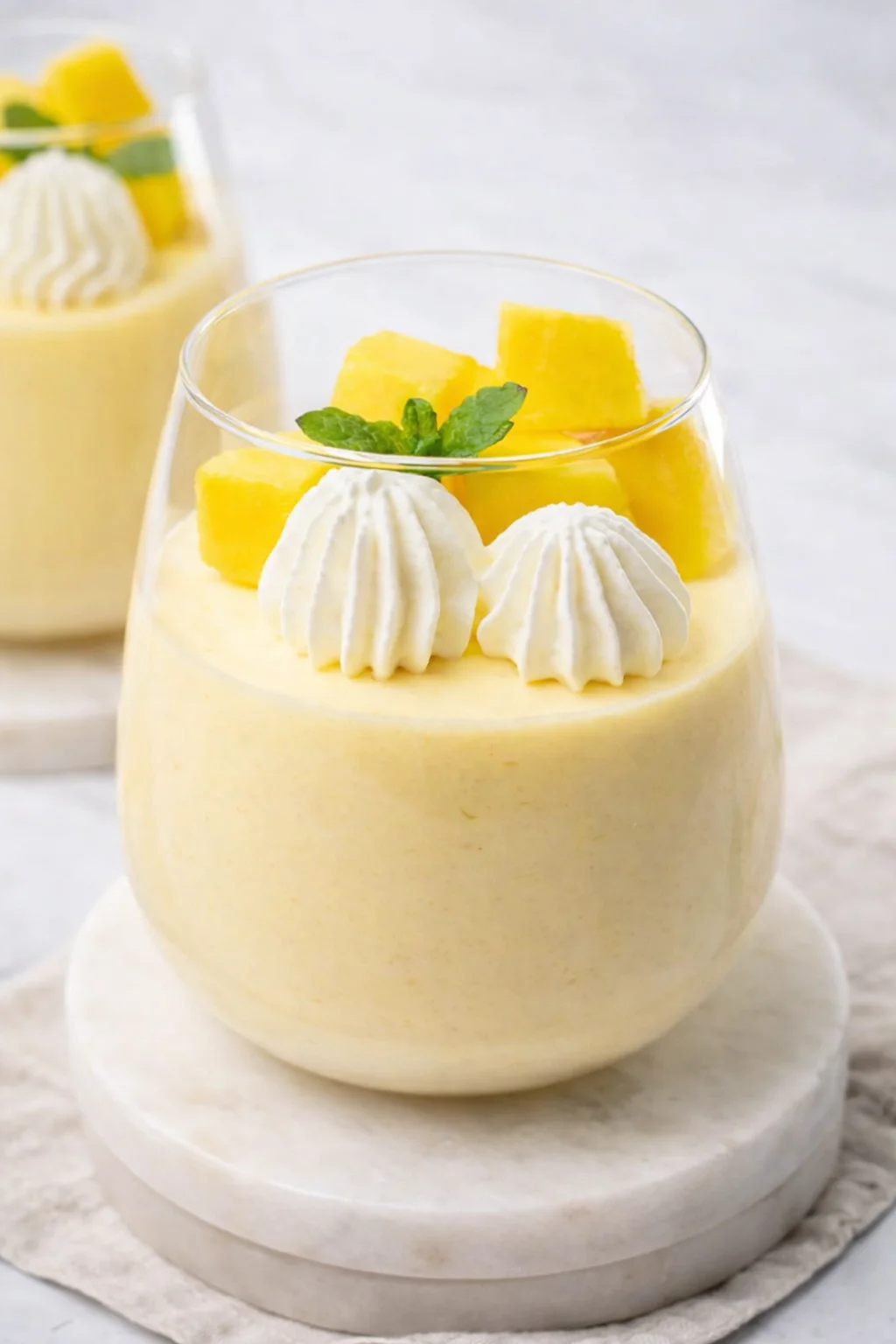
This light and creamy mango mousse is a wonderful way to add a touch of sweetness to your day! Made from fresh, pureed mangoes and topped with luscious chantilly cream, it’s a dessert that’s both satisfying and refreshingly light. You can enjoy it simply on its own, paired with a scoop of ice cream, or layered into your favorite cakes and pies for a delightful fruity surprise everyone will love!
Mousse is such a versatile dessert—light, airy, and packed with flavor, it comes in all sorts of exciting versions. You’ll find fruity options featuring mango, strawberry, raspberry, and passionfruit, as well as richer flavors like chocolate, vanilla, coffee, or caramel that warm you from the inside out.
Although all mousses share that signature fluffy texture, the way to make them can vary quite a bit. Some recipes call for egg whites, egg yolks, and heavy cream as a base; others rely on gelatin, yogurt, or cream alone. The choice depends on how thick or soft you want your mousse, but the great news is there’s no single correct way to do it! This mango mousse strikes a perfect balance between creamy and light without any eggs involved.
This creamy mango mousse made with fresh, pureed mangoes and topped with smooth chantilly cream is the ideal sweet treat that won’t leave you feeling heavy!
Hi there! This mango mousse is a dreamy, light, and airy no-bake dessert made to showcase fresh pureed mangoes, rounded out with a fluffy cloud of chantilly cream. It’s completely egg-free, easy to throw together from simple pantry staples, and wonderfully elegant served in individual cups. Whether it’s a quick weeknight indulgence or the grand finale at your next dinner party, it’s sure to impress.
Here’s a little peek at what’s coming your way:
- Easy-to-understand ingredient notes and swap ideas—from fresh, frozen, to canned mango, plus vegetarian gelatin alternatives.
- A straightforward step-by-step guide—covering blooming gelatin, whipping cream just right, and gently folding for that perfect mousse texture.
- Pro tips, flavor twists, and decoration pointers so you can make it your own for any occasion.
- Storage suggestions, FAQs to clear up doubts, and a handy printable recipe card with everything measured out precisely — this recipe makes about 3-4 servings and needs around 6 hours to set in the fridge.
Ready when you are! Grab a digital scale, a trusty rubber spatula, and your electric hand mixer, then scroll down for the full recipe.
Made with fresh, pureed mangoes and topped with delicious chantilly cream, this creamy mango mousse will satisfy your sweet tooth without weighing you down!
What Makes This Recipe Special
- No fancy kitchen gadgets required – You probably already have everything you need to whip up this dessert at home.
- Super easy to make – This eggless mango mousse comes together in just a few simple steps. The ingredients are easy to find in most grocery stores, plus I share some handy substitutes if your store doesn’t carry everything.
- Simple yet stunning – These no-bake mango mousse cups are bright, fresh, and beautiful. Topped with chantilly cream (sweetened homemade whipped cream), herbs, and juicy fruit, they’re perfect for an elegant finish or to brighten up any special occasion.
- Irresistibly delicious – This mousse melts in your mouth! Made with fresh, good-quality mangoes and a careful balance of sweetness, you’ll find it hard to stop at one serving—I speak from experience!
-
So flexible – This mango mousse is a great base to customize. Try different toppings, swap flavors (a tangy raspberry mousse is lovely), or layer it in desserts. See my Flavor Variations section for some fun ideas!
Ingredients and Smart Substitutes
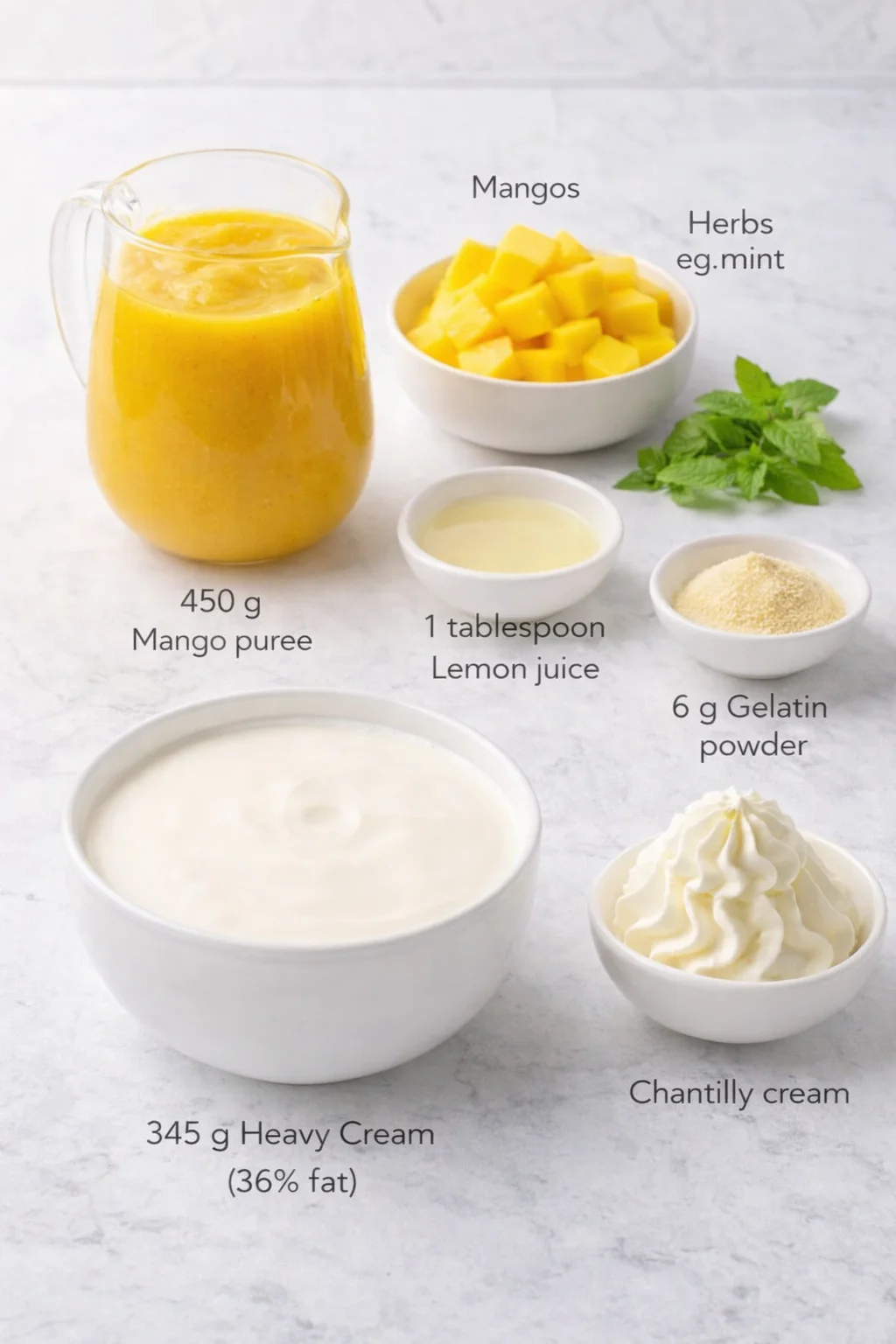
- 450 g Mango puree Puree the fresh mangos and measure it after. If frozen fruit is used, let it come to room temperature, puree it, then reduce the puree by cooking over medium heat for 10 minutes or until the mixture slightly thickens and some water evaporates. Measure it after the reduction process.
- 60 g Powdered sugar More or less depends on the sweetness of the fruit, use it sifted.
- 1 tablespoon Lemon juice freshly squeezed
- 6 g Gelatin powder
- 345 g Heavy Cream 36% fat, use it very cold
- Mangos fresh
- Herbs eg. mint
- Chantilly cream Use my chantilly cream recipe
Step-by-Step Mousse Method
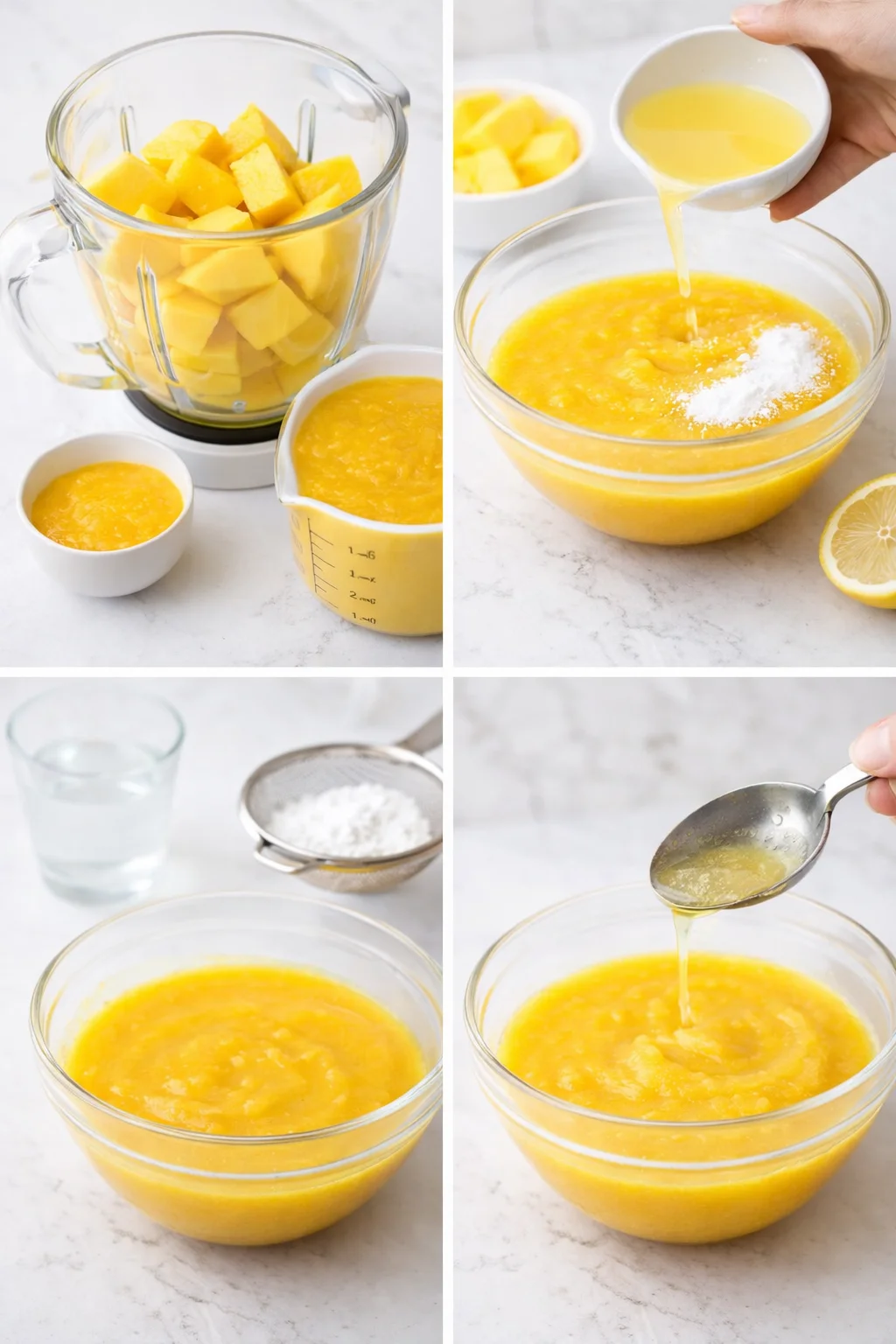
- Wash and peel mangoes, puree in a blender, and measure the mango puree (if using frozen mangoes, thaw first and simmer the puree ~10 minutes to reduce excess water; cool before measuring).
- Stir freshly squeezed lemon juice and sifted powdered sugar into the mango puree; taste and adjust sweetness.
- Bloom gelatin by sprinkling it over 2 tablespoons cold water and let sit about 3 minutes until jelly-like.
- Warm the bloomed gelatin gently until melted (do not boil), let cool slightly, and stir it into the mango puree, ensuring the puree is at room temperature.
- Whip very cold heavy cream with an electric mixer to early stiff (soft‑firm) peaks.
- Gently fold the whipped cream into the mango mixture using a rubber spatula until combined and airy.
- Spoon or pipe the mousse evenly into four serving cups and refrigerate for at least 6 hours to set.
- While the mousse chills, whip chantilly cream.
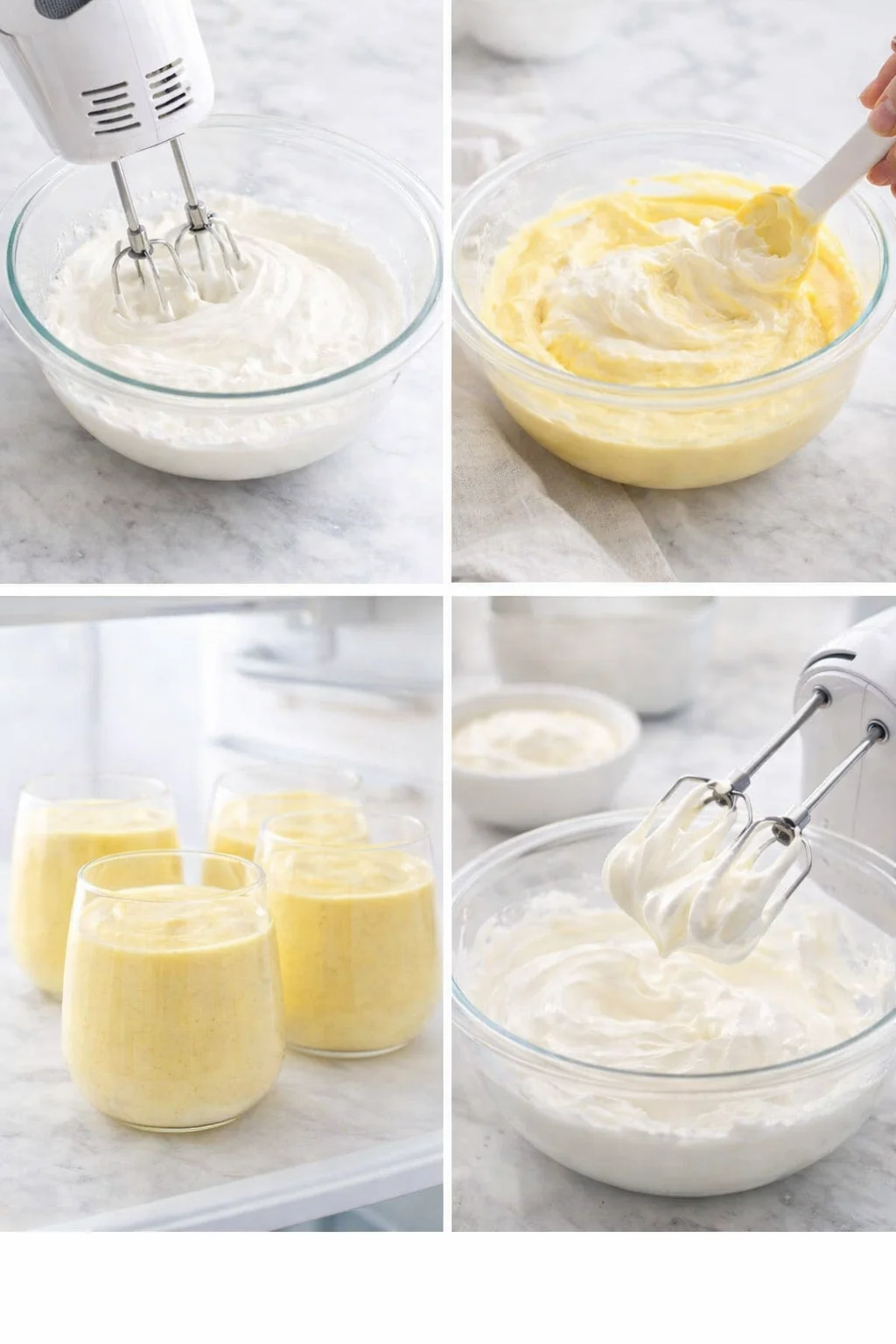
- Top each set mousse with a swirl of chantilly cream, fresh mango slices, and herbs (e.g., mint).
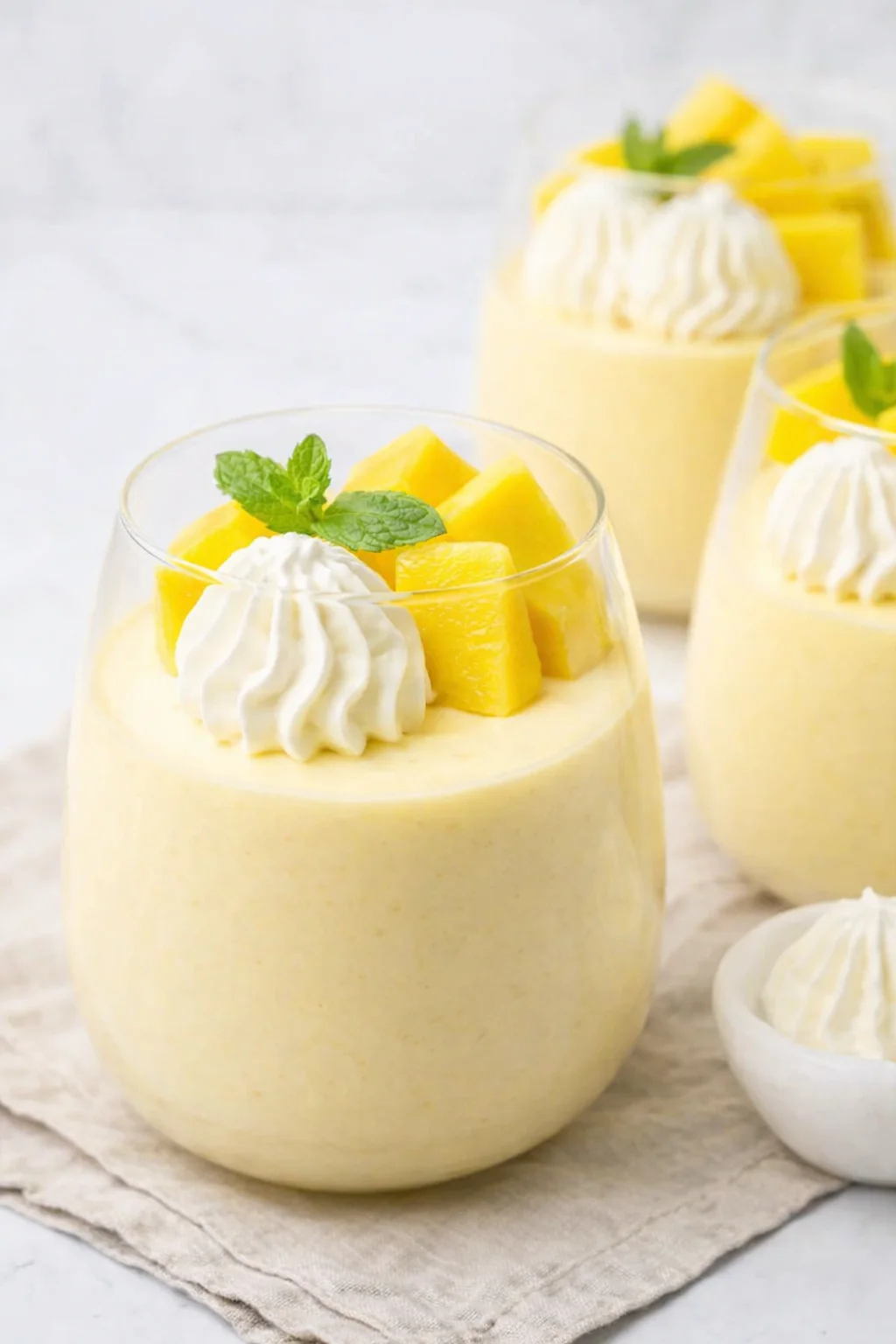
Pro Tips for Fluffy Mousse
- If you’re using frozen mangoes, let them thaw and come to room temperature before blending. For best texture, cook the puree over medium heat for about 10 minutes to reduce excess water, which makes a firmer mousse.
- Adjust powdered sugar depending on how sweet your mangoes are. If they’re perfectly ripe and sweet, you might be able to skip additional sugar.
- Patience is key! Let your mousse set in the fridge for at least six hours to get that perfect spoonable texture. If you’re making a no-bake mousse pie, pour it into a graham cracker crust before chilling.
- Always store the mango mousse in the fridge and serve it chilled — it tastes best cold and fresh.
Using a digital scale helps achieve accurate measurements, especially with mango puree.
An electric hand mixer is the quickest way to get your heavy cream whipped just right.
A rubber spatula is your best friend when folding ingredients to keep the mousse light without overmixing.
Flavor Swaps and Add-Ins
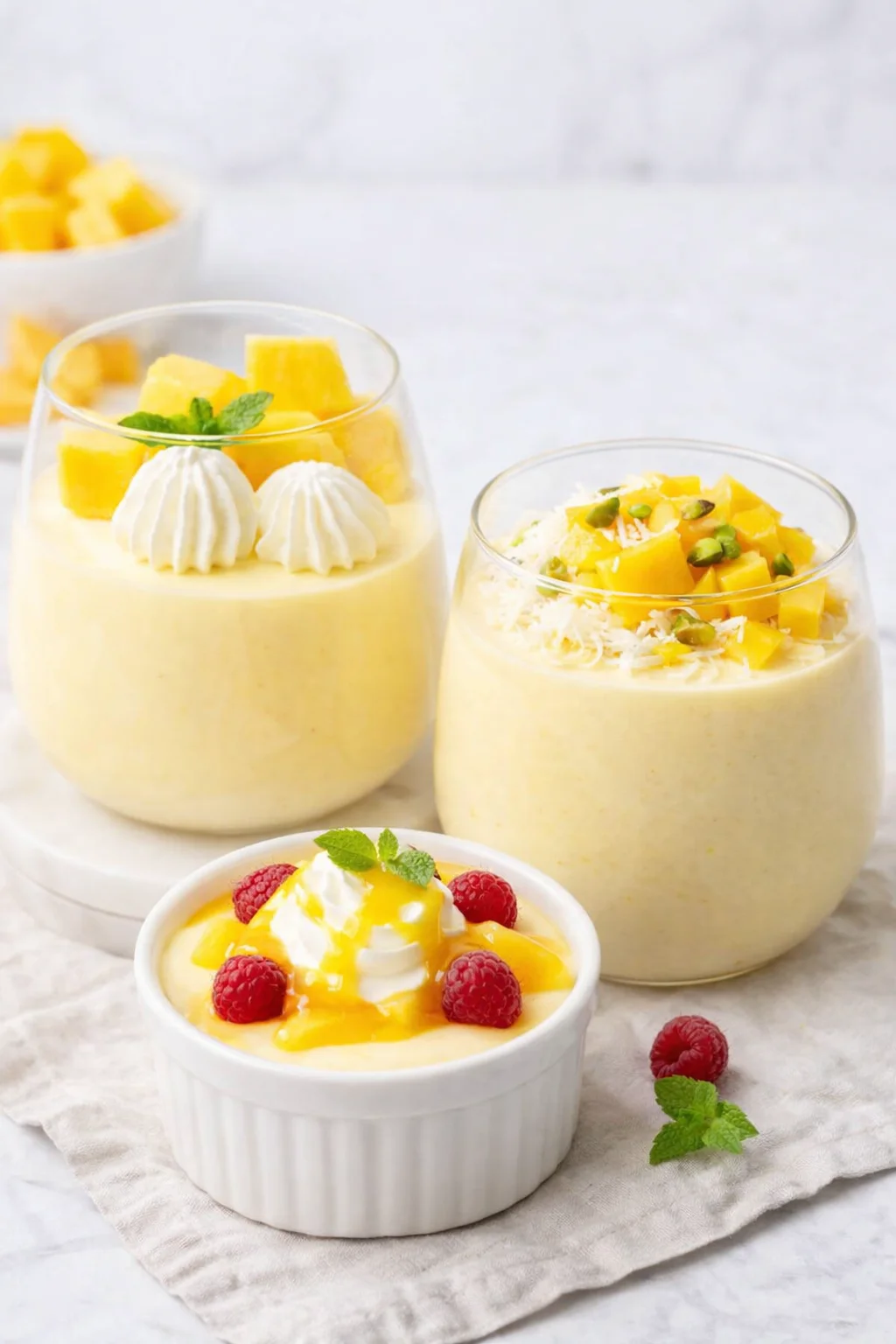
This mango mousse recipe is wonderfully flexible—here are some fun ways to make it your own:
Swap the fruit: Use other fresh fruits like strawberries or raspberries to switch things up. Feel free to mix fruits for new flavor combos.
Add a compote layer: For something extra special, add a fruit compote layer—like a quick macerated strawberries recipe—either at the bottom or on top after the mousse sets.
Try different toppings: Instead of just mango slices, experiment with blueberries, raspberries, chopped nuts, pistachios, or even a drizzle of honey or melted chocolate for extra flair.
Feeling adventurous? Use this mango mousse as a filling for cakes or layer it in parfaits to impress family and friends!
Storing and Make-Ahead Advice
Cover your mango mousse cups tightly with plastic wrap and store them in the fridge for up to two days; the same approach works well for chocolate mousse cups. Avoid freezing since it drastically changes the mousse’s texture and can make it watery or icy. If you’d like a sturdier make-ahead dessert that chills overnight, try this Easy No-Bake Cheesecake Recipe.
Common Questions Answered
What is the difference between mousse and souffle?
While both desserts are light and airy, mousse is typically made with cream or milk and served cold. Souffle, by contrast, uses eggs and sugar, is baked, and served warm.
What is the difference between mousse and pudding?
Mousse isn’t cooked and has a lighter, fluffier texture, whereas pudding is cooked, resulting in a thicker, denser consistency.
Can I make this recipe without gelatin?
If gelatin isn’t an option for you, you can skip it; your mousse will be creamier and less airy—still delicious, just not the traditional mousse texture. Prefer a firmer, set, no-bake dessert without gelatin? Try this No-Bake Cheesecake with Cool Whip.
How much mousse does this recipe make?
This recipe makes about 3 to 4 portions, with each serving about 2.5 deciliters (around 8.5 ounces) in size.
How do I know if mousse has gone bad?
Spoiled mousse may change color, become watery or lumpy, or develop a sour smell. Always keep it refrigerated and discard if it’s been stored more than two days or shows any of these signs.
Have you tried this recipe?
Please take a moment to give it a 5-star ⭐️⭐️⭐️⭐️⭐️ rating on the recipe card and feel free to leave a comment too! I love hearing how your dessert turned out, and your feedback helps other cooks feel confident in the kitchen.
Equipment
- Digital scale
- Rubber spatula
- Electric hand mixer
Ingredients
Mango Mousse
- 450 g Mango puree Puree the fresh mangos and measure it after. If frozen fruit is used, let it come to room temperature, puree it, then reduce the puree by cooking over medium heat for 10 minutes or until the mixture slightly thickens and some water evaporates. Measure it after the reduction process.
- 60 g Powdered sugar More or less depends on the sweetness of the fruit, use it sifted.
- 1 tablespoon Lemon juice freshly squeezed
- 6 g Gelatin powder
- 345 g Heavy Cream 36% fat, use it very cold
Decoration
- Mangos fresh
- Herbs eg. mint
- Chantilly cream Use my chantilly cream recipe
US customary cup measurement is an indicative figure only. Measure the ingredients with a digital scale by weight (gram). Baking is art but also science which requires precision and accuracy.
Instructions
Mango Mousse
- Wash and peel the mangoes, then puree them in a blender before measuring.
- Stir the freshly squeezed lemon juice and sifted powdered sugar into the mango puree. Taste and add more sugar if needed.
- Bloom the gelatin by sprinkling it over 2 tablespoons of cold water and letting it sit for 3 minutes until it becomes thick and jelly-like. Warm gently, then stir the liquid gelatin into the mango puree. Make sure the puree is at room temperature, not too hot or cold.
- Whip the very cold heavy cream with an electric hand mixer until early stiff peaks form. Avoid overwhipping to prevent the cream from turning hard or curdling.
- Carefully fold the whipped cream into the mango mixture using a rubber spatula to keep the texture light.
- Spoon or pipe the mousse into 4 cups, or layer it into a prepared Oreo pie crust, then refrigerate for 6 hours to set well.
Decoration
- Whip up some chantilly cream, and decorate your mousse servings with fresh mango slices and herbs.
- Keep the mousse refrigerated and consume within two days. Do not freeze.
Notes
- Don’t skip the lemon juice as it really brightens the mango’s flavor and helps stabilize the mousse.
- Adjust the sugar to your taste—mangoes vary in sweetness, so some may need less or none at all.
- If you use frozen mango, be sure to cook the puree for about 10 minutes to reduce excess water, then measure it after.
- Choose heavy cream with a fat content of at least 36% and make sure it’s very cold for the best whip.
- Whip the cream only to early stiff peaks to ensure it folds well without curdling or becoming butter.
- Patience pays off—don’t rush the setting time in the fridge for the perfect texture.
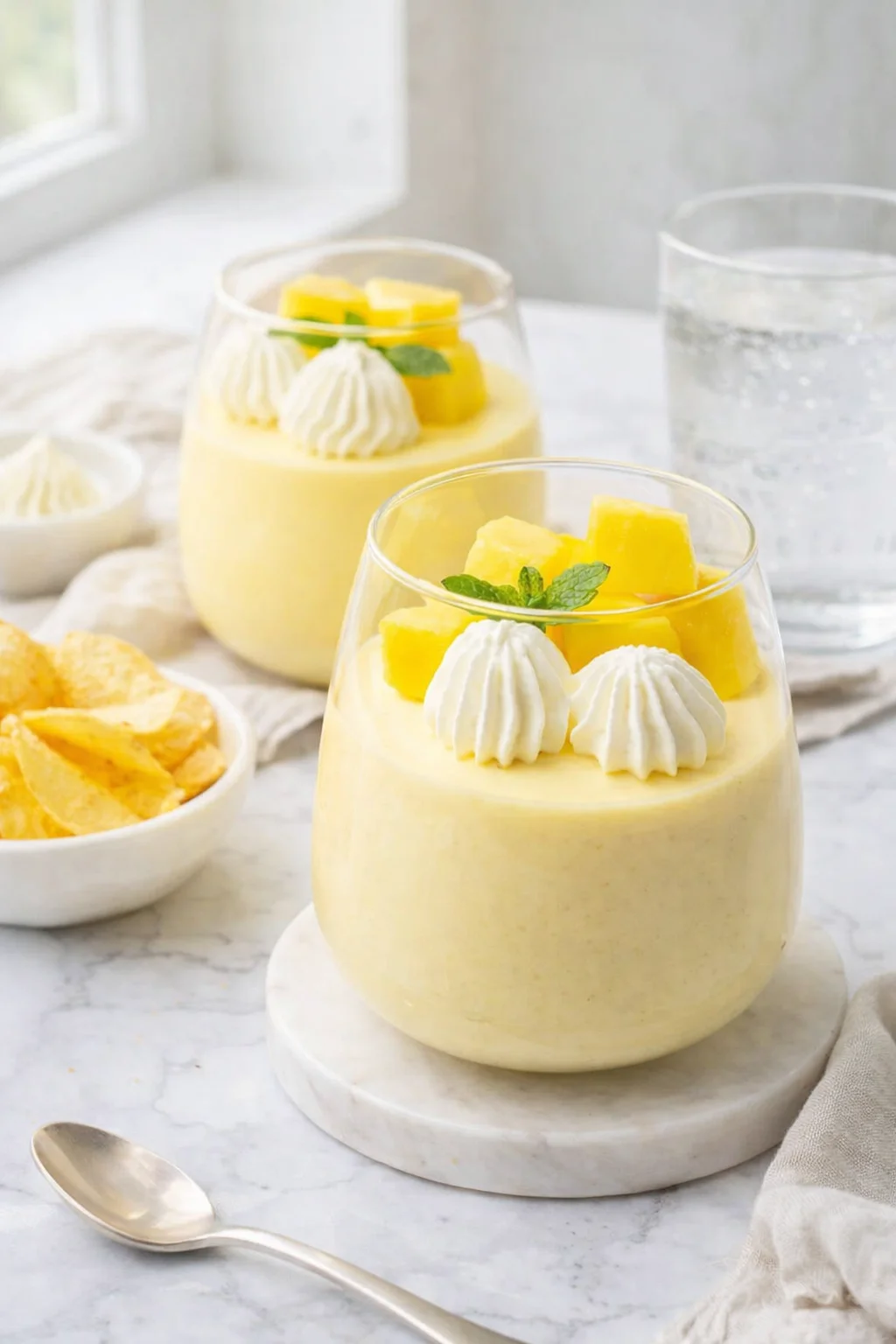
A light and creamy no-bake mango mousse made from fresh pureed mangoes, gelatin, and whipped heavy cream, topped with chantilly cream and fresh mango slices. It is egg-free, easy to prepare, and perfect for a refreshing dessert.
- Prep Time: 20 minutes
- Cook Time: 10 minutes (for simmering mango puree if using frozen)
- Total Time: 6 hours 30 minutes (including chilling)
- Yield: 4 servings 1x
- Category: Dessert
- Cuisine: International
Ingredients
- 450 g fresh mango puree (puree fresh mangoes, or thaw and cook frozen mango puree to reduce excess water before measuring)
- 60 g powdered sugar (sifted, adjust sweetness to taste)
- 1 tablespoon freshly squeezed lemon juice
- 6 g gelatin powder
- 2 tablespoons cold water (for blooming gelatin)
- 345 g heavy cream (36% fat, very cold)
- Fresh mango slices (for decoration)
- Chantilly cream (for topping)
- Fresh herbs e.g., mint (for decoration)
Instructions
- Wash and peel mangoes, then puree in a blender and measure 450 g of mango puree. If using frozen mangoes, thaw and simmer puree over medium heat for about 10 minutes to reduce water, then cool and measure.
- Stir freshly squeezed lemon juice and sifted powdered sugar into the mango puree. Taste and adjust sweetness as needed.
- Bloom gelatin by sprinkling gelatin powder over 2 tablespoons cold water. Let sit about 3 minutes until gelatin becomes thick and jelly-like.
- Gently warm the bloomed gelatin until melted (do not boil). Let it cool slightly before stirring into the mango puree, ensuring the puree is at room temperature.
- Whip the very cold heavy cream with an electric mixer until early stiff peaks form (soft-firm peaks). Be careful not to overwhip.
- Gently fold the whipped cream into the mango mixture with a rubber spatula until well combined and airy.
- Spoon or pipe the mousse into 4 serving cups evenly and refrigerate for at least 6 hours to set.
- While the mousse chills, whip chantilly cream following your preferred recipe.
- Once set, top each mousse with a swirl of chantilly cream, fresh mango slices, and fresh herbs such as mint.
- Keep mousse refrigerated and consume within two days. Do not freeze as texture will be compromised.
Notes
Do not skip the lemon juice as it brightens flavor and helps stabilize the mousse., Adjust sugar according to sweetness of mangoes; ripe mangoes may require less or no added sugar., For best texture, use heavy cream with at least 36% fat and very cold for whipping., Avoid overwhipping cream to prevent curdling or turning into butter., Allow full 6 hours setting time in fridge for ideal mousse texture., If using frozen mango puree, reduce by simmering to remove excess water before using., Use a digital scale for precise ingredient measurements., Mango mousse cups can be decorated with various toppings like different berries, chopped nuts, or chocolate drizzle for variation.
Nutrition
- Serving Size: approximately 2.5 deciliters (around 8.5 ounces) per serving
- Calories: 362 kcal per serving
- Fat: 32 g per serving
- Carbohydrates: 35 g per serving
- Protein: 3 g per serving
More in Cupcakes