Vanilla Sheet Cake with Whipped Buttercream Frosting – Sally’s Baking
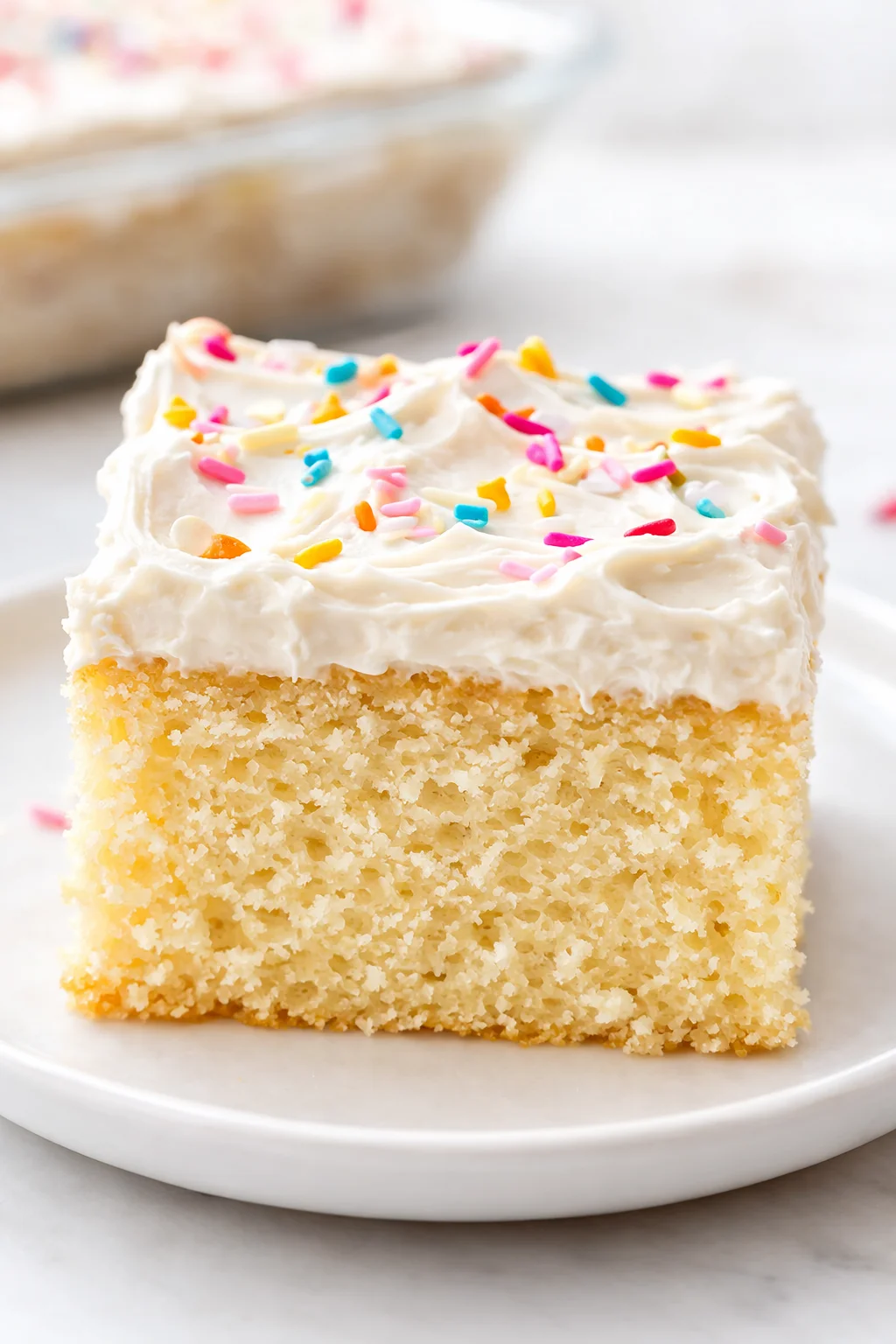
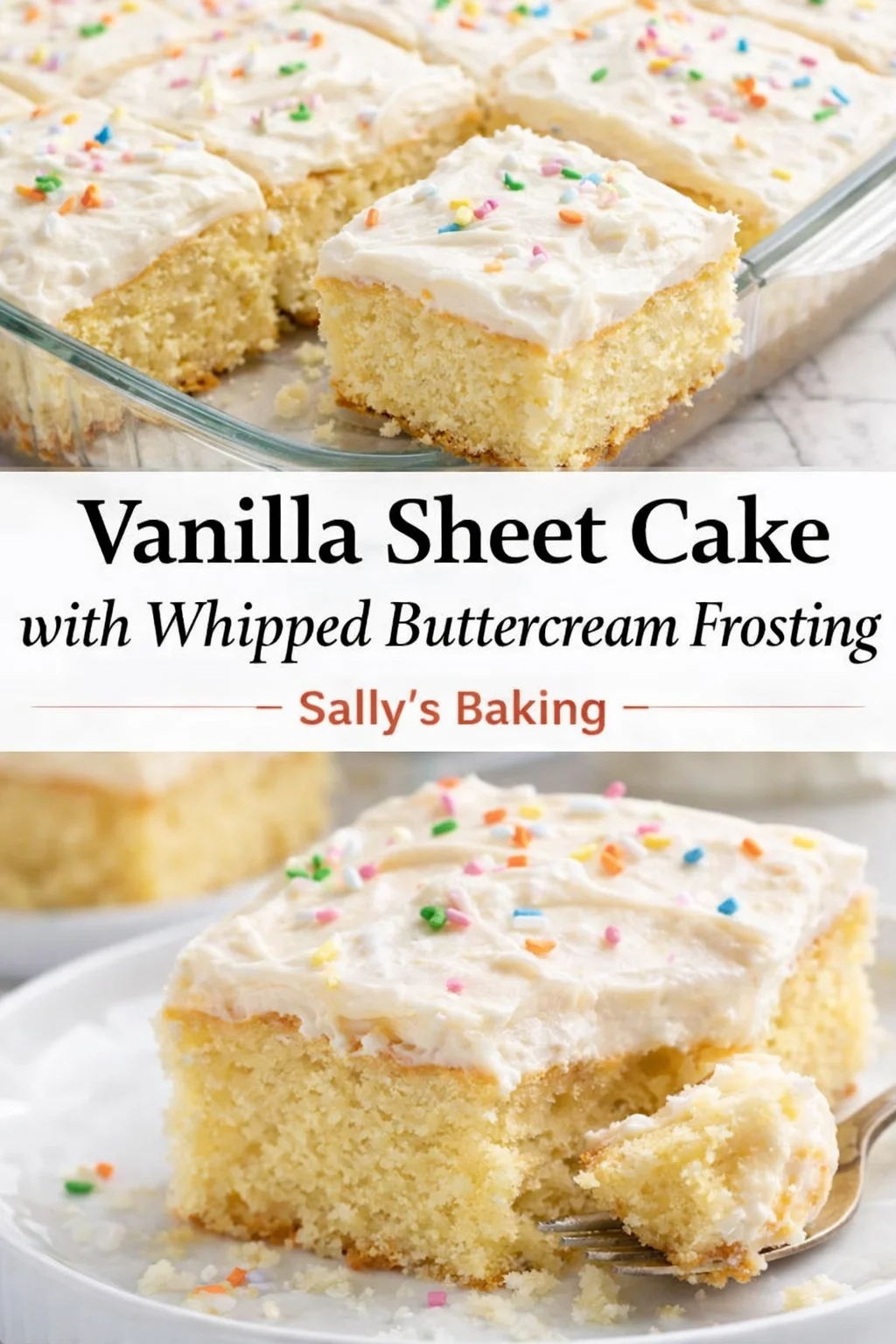
This vanilla sheet cake recipe uses the reverse creaming method, a simple trick that gives you a soft, springy cake with a rich buttery vanilla flavor you’ll love. It’s perfect for a birthday sheet cake or any time you want a classic, no-fuss dessert. Finish it off with whipped vanilla buttercream—a fluffy frosting made from butter, confectioners’ sugar, and heavy cream whipped to cloud-like perfection.
Vanilla cake is truly timeless, isn’t it? From three-layer cakes to cupcakes, naked cakes, strawberry shortcake style, six-inch cakes, confetti versions, and vanilla-white hybrids—there are so many ways to enjoy vanilla. They all use similar ingredients but just tweak amounts and methods.
But what about a simple vanilla sheet cake that’s classic and straightforward?
That’s exactly what we’re making today. A classic vanilla sheet cake with a soft, springy crumb and a buttery vanilla punch. It’s the perfect birthday cake you can whip up without fuss, topped with a fluffy mountain of whipped buttercream. Pure nostalgia in every bite!
One reader, Gabrielle, said: “I followed this recipe exactly and it turned out amazing! Made it for a birthday at work and everyone loved it. It traveled well and served easily right from the pan. I’ll definitely make this again! ★★★★★“
Another reader, Teri, shared: “Just made this today—delicious, fluffy, and it rose perfectly! ★★★★★“
And Alycia wrote: “Love, love, LOVE this cake! It’s my go-to birthday cake. Fluffy with great crumb and flavor. I’ve even made it as a 2-layer cake using the notes here. Sometimes I add sprinkles or mini chocolate chips, too! ★★★★★“
My original vanilla cake recipe makes more batter than needed for a 9×13-inch quarter sheet pan, and my strawberry shortcake cake batter is just a little short. I also have a two-layer vanilla/white hybrid that’s super light and fits the pan perfectly, but it lacks that tight, buttery crumb this classic requires. So for today, I combined everything I love about those cakes and adjusted the batter amount just right for this classic pan size.
Before we jump in, I want to walk you through the mixing method called reverse creaming—you’re going to adore how easy it is and how it transforms the cake texture. Even though this cake is pretty straightforward, reading my tips will really help you nail it.
This vanilla sheet cake is a classic recipe perfected: a simple, buttery vanilla batter made with the reverse creaming method that creates a soft, springy crumb, topped with an ultra-fluffy whipped vanilla buttercream. It’s easy enough for every day, special enough for birthdays, and versatile for celebrations like summer cookouts or flag-themed parties.
Below, you’ll find a step-by-step photo guide to the reverse creaming method, a clear ingredients list (yes, cake flour, whole milk, and sour cream all play a star role here), straightforward baking instructions, tips for frosting, advice on pans, make-ahead ideas, freezing tips, plus fun variations and decorating ideas. I’ve also included troubleshooting tips and storage ideas so you’re confident every step of the way.
This recipe is approachable for beginners yet satisfying for the seasoned baker. Just take a peek at the tips before starting (little things like cubing the butter and not over-mixing really matter). Gather your ingredients, get ready, and soon you’ll be frosting a ridiculously happy cake.
Why This Method Makes a Difference
This vanilla sheet cake is exactly the kind of recipe that feels easy yet impresses everyone. It combines a soft, springy crumb with a classic buttery vanilla taste—all from simple pantry ingredients. Here’s why it’s a keeper in your recipe box:
- Perfect texture: The reverse creaming technique gives you a velvety crumb that’s firm enough to handle but tender and airy. Every slice stays beautiful and holds together, perfect for serving straight from the 9×13 pan.
- Delicious vanilla flavor: A full tablespoon of vanilla and real butter pack the cake with rich, nostalgic flavor without being overly sweet.
- Simple ingredients, consistent results: Just cake flour, butter, whole milk, sour cream, eggs, and your usual pantry staples. No weird ingredients or complicated steps.
- Super versatile: Frost with whipped vanilla buttercream as shown (or get colorful buttercream piping ideas on cupcakes), or swap for Swiss meringue or chocolate buttercream. You can even make cupcakes or a two-layer cake with this batter—see the notes!
- Great for celebrations: This cake travels well and serves up nicely, making it ideal for parties or birthdays. Top with sprinkles, fresh berries, or turn it into a festive flag cake in minutes.
- Make-ahead friendly: Both cake and frosting freeze or refrigerate well, so you can prep in advance and take the stress out of baking.
Bottom line: this vanilla sheet cake hits that sweet spot of simple, tender, and endlessly customizable. You’re going to love baking and eating it.
If you caught my post on Tessa’s Blackberry Lavender Cake, you know I’m a big fan of the reverse creaming method. Before that, I had only tried it a few times, but that cake’s texture hooked me. Later, I used the same technique for my strawberry shortcake cake. Today’s vanilla sheet cake gets the same treatment.
Traditionally, cakes start with creaming butter and sugar together. Reverse creaming flips this approach: it begins with dry ingredients, then adds butter, milk, and eggs last. This method produces a tight yet tender crumb with a springy softness that feels smooth and lightly dense—kind of like a soft pound cake but much lighter.
Don’t worry, it’s super easy.
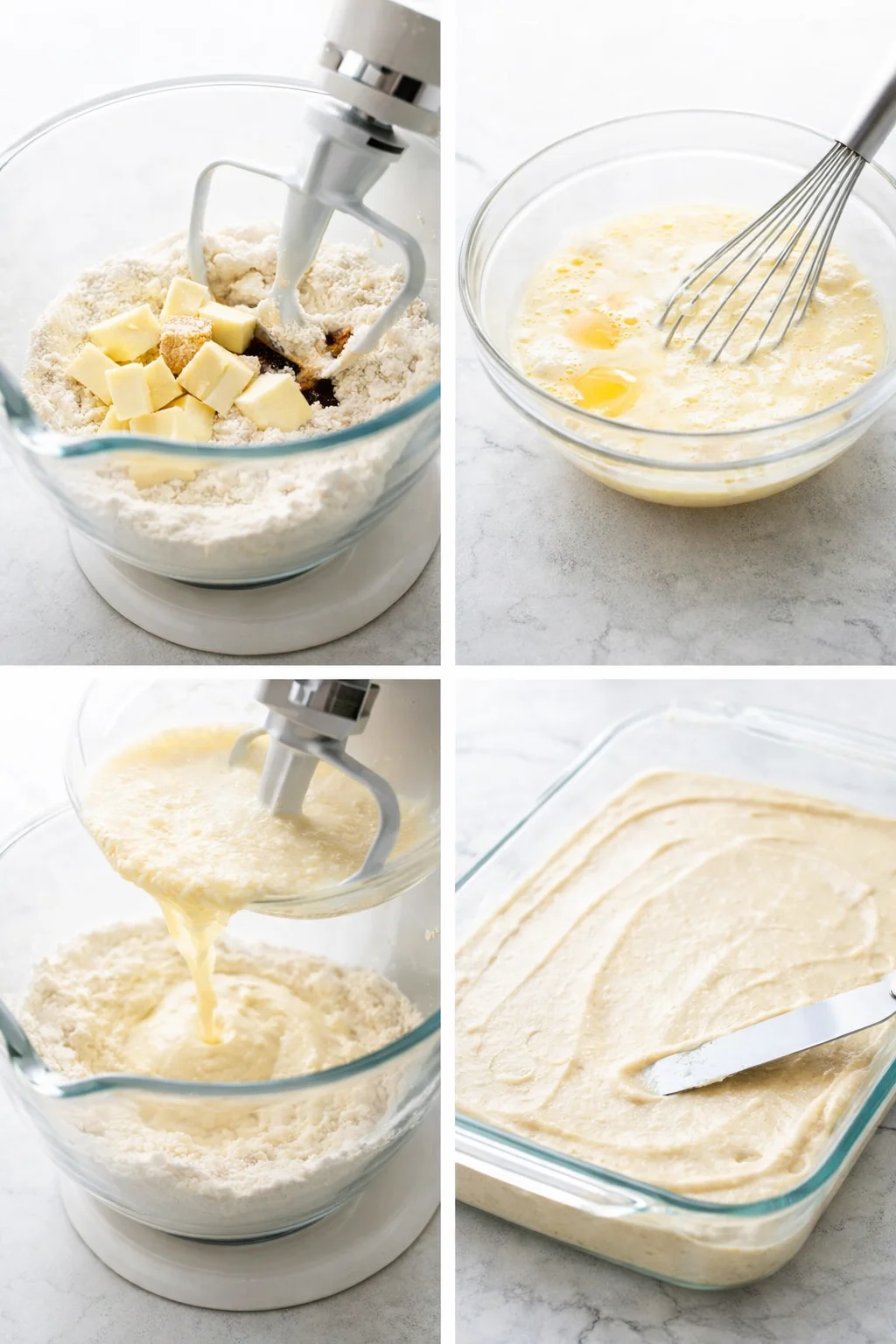
Start by sifting the dry ingredients—including sugar—into a bowl. Sifting is key because it lifts the dry mix making it light and makes sure big sugar crystals don’t clump. Since we aren’t creaming butter and sugar together, the sugar stays pretty intact.
Then add cold, cubed butter, a bit of milk, and vanilla. The butter coats the flour, blocking some gluten formation for a finer crumb and softer cake. You’ll taste the difference for sure.
Fun fact: coating flour with fat is also how biscuits and pie crust get that flaky, light texture you love—just like in a flaky homemade apple pie crust.
Pro Tip: Keep butter cold and cube it before mixing. Small cubes warm faster and are easier to mix than whole sticks or larger pieces once at room temp.
Next, stir in the rest of the milk, sour cream, and eggs—adding the liquids last is part of what keeps the batter creamy and smooth. Check out the batter in the photo on the left (below). It’s one of the creamiest cake batters you’ll ever work with! Just don’t over-mix.
Ingredients for a Tender, Classic Cake
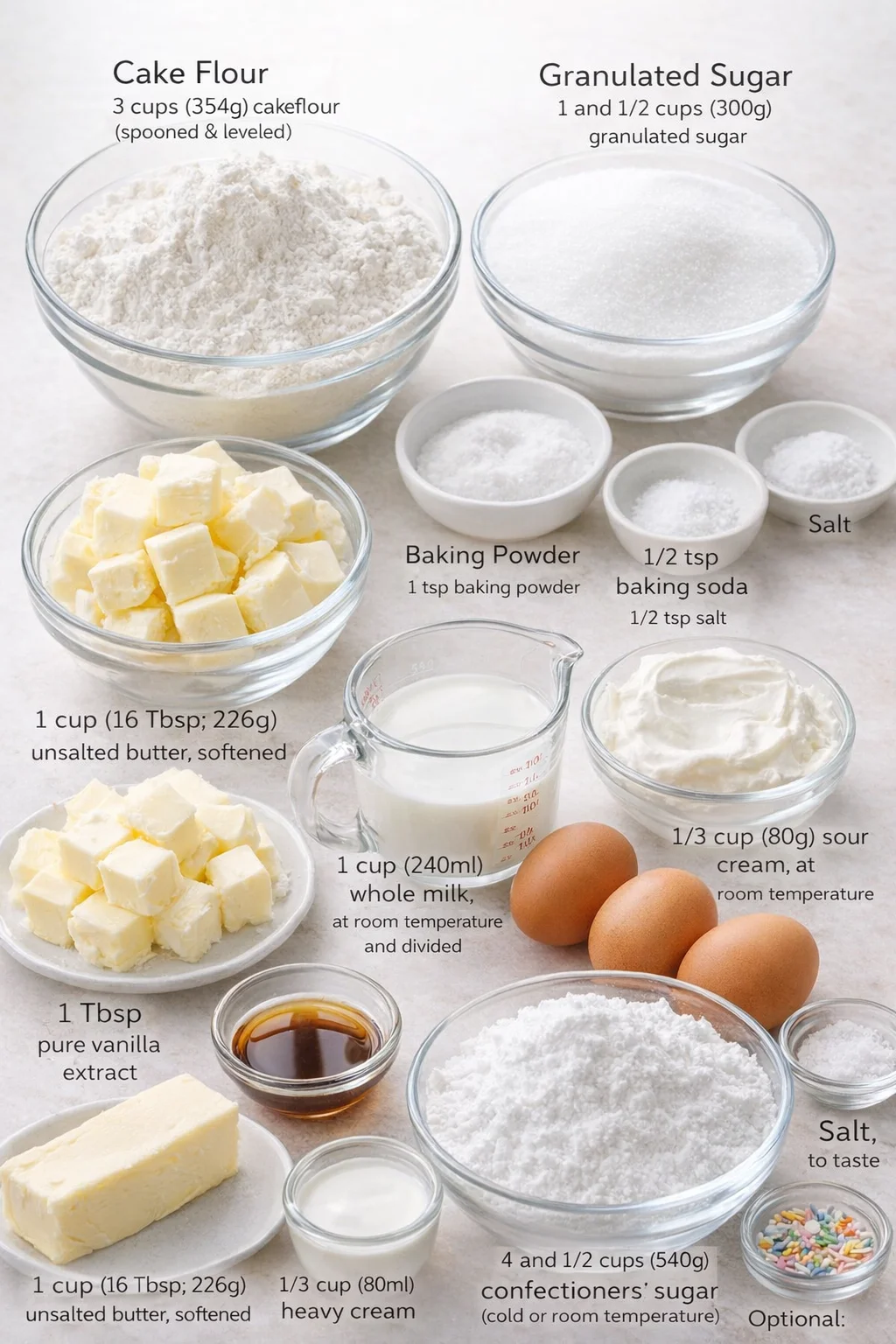
- 3 cups (354g) cake flour (spooned & leveled)
- 1 and 1/2 cups (300g) granulated sugar
- 1 teaspoon baking powder
- 1/2 teaspoon baking soda
- 1/2 teaspoon salt
- 1 cup (16 Tbsp; 226g) unsalted butter, cubed and softened to room temperature
- 1 Tablespoon pure vanilla extract
- 1 cup (240ml) whole milk, at room temperature and divided
- 1/3 cup (80g) sour cream, at room temperature
- 3 large eggs, at room temperature
- 1 cup (16 Tbsp; 226g) unsalted butter, softened to room temperature
- 4 and 1/2 cups (540g) confectioners’ sugar
- 1/3 cup (80ml) heavy cream (cold or room temperature)
- 2 teaspoons pure vanilla extract
- salt, to taste
- optional: sprinkles for garnish
How to Make the Cake
- Preheat oven to 350°F (177°C) and generously grease a 9×13-inch pan.
- Cube the butter and let it soften to room temperature; bring the milk, sour cream, and eggs to room temperature.
- Sift cake flour, granulated sugar, baking powder, baking soda, and salt into the mixer bowl.
-
Mix the dry ingredients on low just to combine.
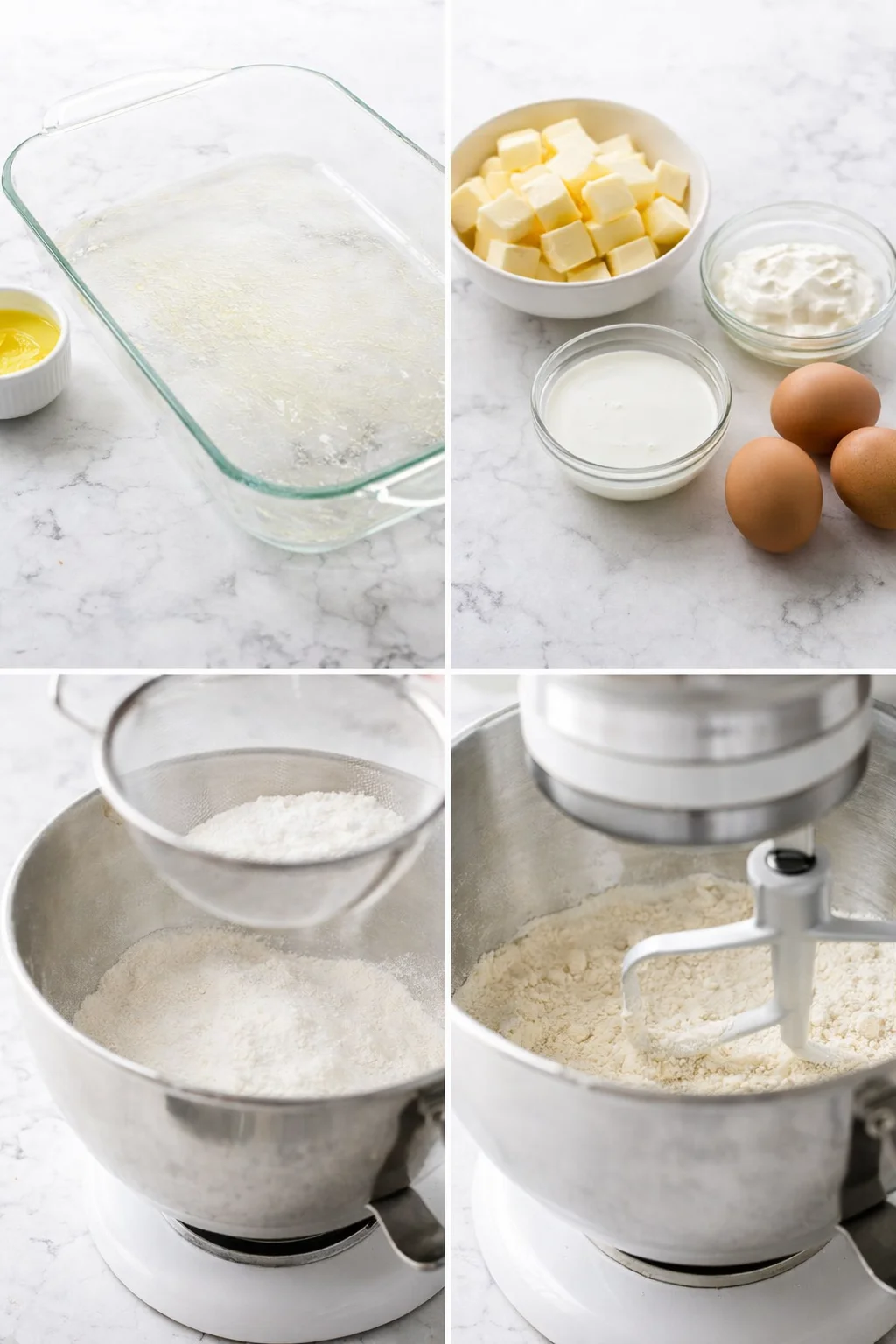
- Add the cubed room-temperature butter, vanilla, and half the milk; mix on medium until the dry ingredients are coated and the mixture resembles a thick, sandy dough (about 1 minute), then scrape down the bowl.
- Whisk the remaining milk, sour cream, and eggs in a separate bowl.
- With the mixer on medium, add the wet mixture to the bowl in three additions, mixing about 15 seconds after each addition; scrape the bowl and mix a final 10–15 seconds until the batter is smooth but slightly lumpy—do not overmix.
-
Pour the batter evenly into the prepared pan and smooth the top with an offset spatula.
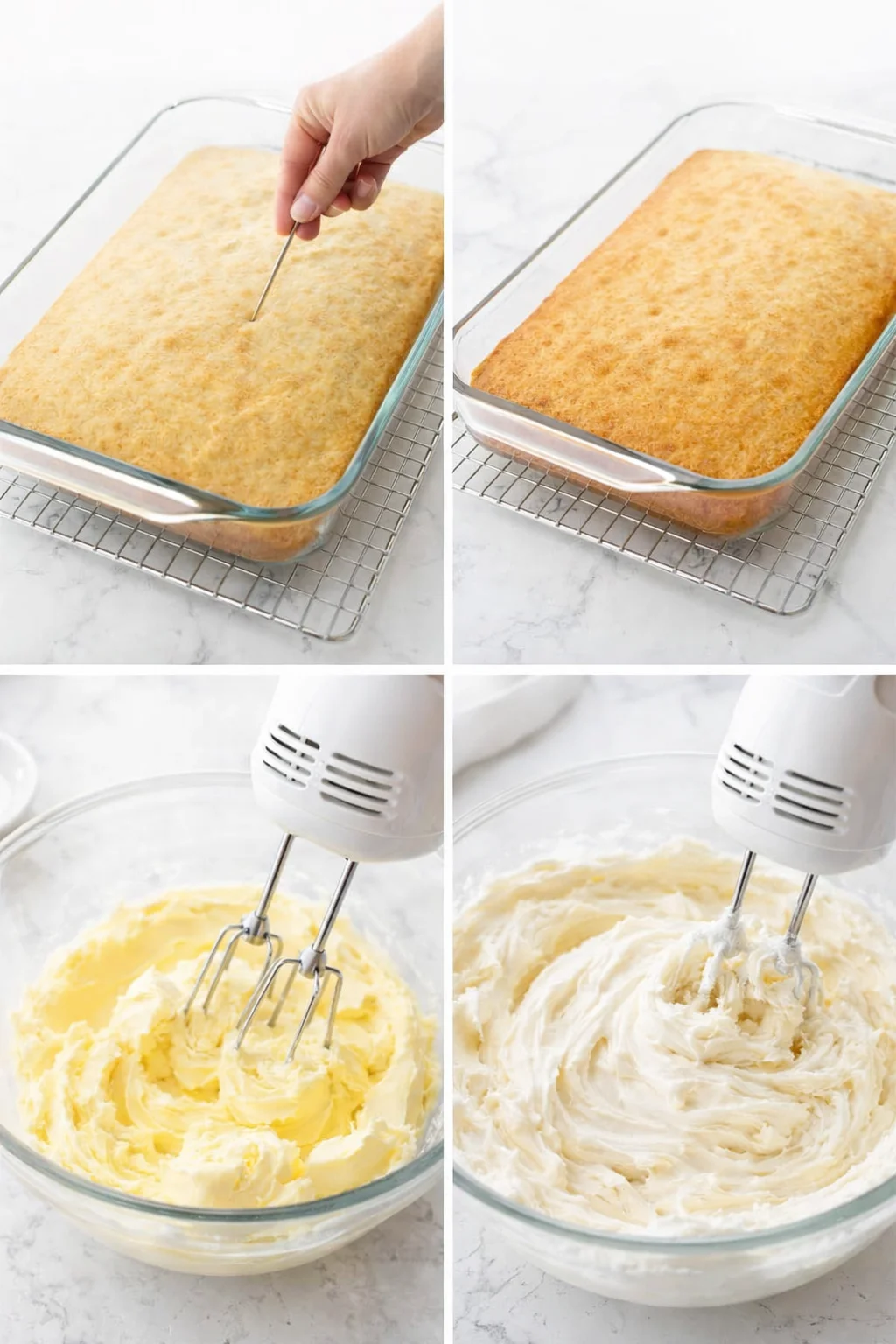
- Bake for 32–35 minutes, or until a toothpick inserted into the center comes out clean (begin checking at 30 minutes if using a dark or metal pan).
- Remove the cake from the oven and cool completely in the pan on a wire rack before frosting.
- Beat the softened butter on medium speed until smooth and creamy (about 2 minutes).
-
Add confectioners’ sugar, heavy cream, and vanilla; beat on low for 30 seconds, then increase to medium-high and beat about 4 minutes until light and fluffy; adjust consistency with more sugar or cream and add a pinch of salt if needed.
-
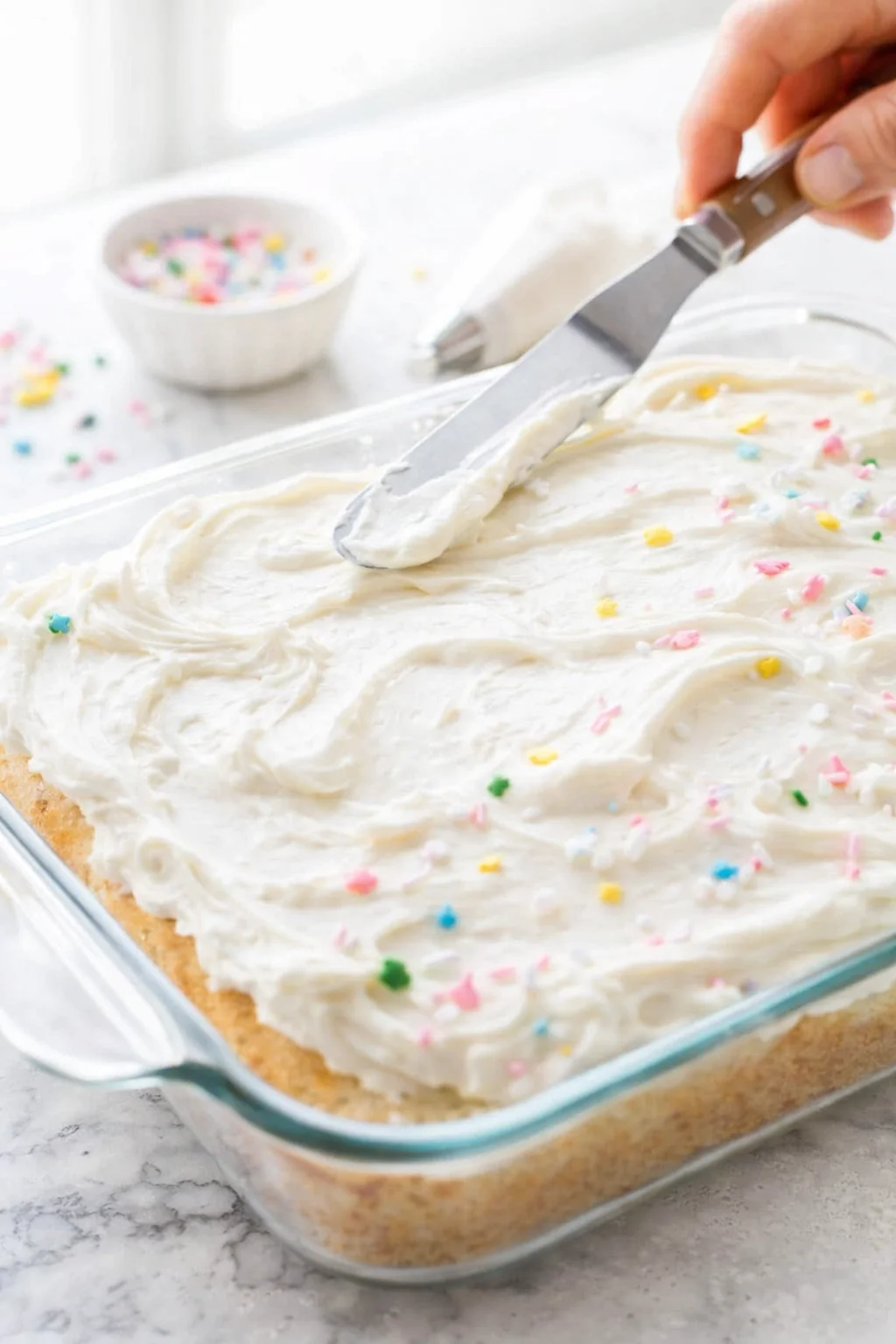
Spread a thick layer of whipped buttercream over the cooled cake with an offset spatula and pipe or decorate as desired.
Expert Tips for Best Results
Use whatever 9×13-inch pan you have. I usually prefer glass pans for sheet cakes because serving right from the dish looks so inviting. It’s the same with my cookies and cream and yellow sheet cakes. If you’re using a metal pan, keep an eye on the baking time, as metal pans tend to bake faster. But in my tests, baking times were pretty similar across different pans.
Mix-Ins, Swaps, and Tweaks
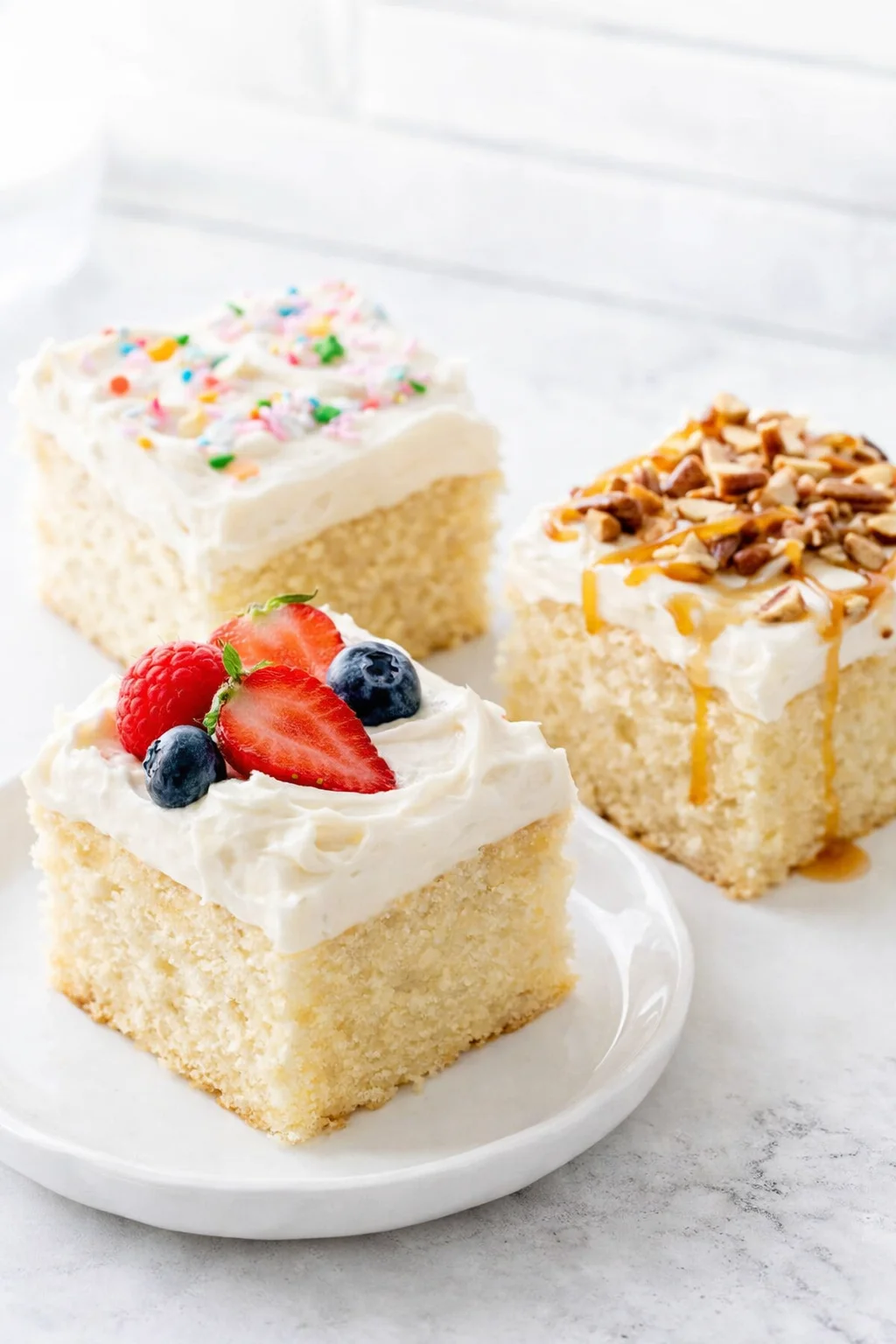
The crowning glory of the cake is this luscious whipped buttercream. It uses the same classic ingredients as my vanilla buttercream but with extra heavy cream whipped longer to create a dreamy fluffy texture. Imagine a buttercream and whipped cream mash-up—so creamy and light it practically floats.
Seriously, don’t you just want to dive into those swirls?
If you’re feeling fancy, try Swiss meringue buttercream for a rich, silky finish. If you want something less sweet, my whipped frosting is a perfect choice—or go with softly sweetened whipped cream. And for a pop of color and flavor, strawberry buttercream frosting pairs beautifully with this vanilla cake.
Let’s talk about turning this classic sheet cake into a patriotic flag cake! Spread about two-thirds of your whipped frosting evenly, then save the rest for piping details. Arrange fresh blueberries and halved strawberries on top to mimic an American flag’s stars and stripes. I used an Ateco 32 tip for the piping between the “stars” and an Ateco 844 tip for the stripes.
This is a fun and festive idea for Memorial Day or Fourth of July celebrations.
Seriously, if you try this cake, please let me know how it turns out—I love hearing from you!
Description
This vanilla sheet cake is made using the reverse creaming method, a simple technique that creates a super soft, springy crumb with rich buttery vanilla flavor. Each ingredient is important here, so for the best results, I don’t recommend substitutions.
Ingredients
- 3 cups (354g) cake flour (spooned & leveled)
- 1 and 1/2 cups (300g) granulated sugar
- 1 teaspoon baking powder
- 1/2 teaspoon baking soda
- 1/2 teaspoon salt
- 1 cup (16 Tbsp; 226g) unsalted butter, cubed and softened to room temperature
- 1 Tablespoon pure vanilla extract
- 1 cup (240ml) whole milk, at room temperature and divided
- 1/3 cup (80g) sour cream, at room temperature
- 3 large eggs, at room temperature
Whipped Vanilla Buttercream
- 1 cup (16 Tbsp; 226g) unsalted butter, softened to room temperature
- 4 and 1/2 cups (540g) confectioners’ sugar
- 1/3 cup (80ml) heavy cream (cold or room temperature)
- 2 teaspoons pure vanilla extract
- salt, to taste
- optional: sprinkles for garnish
Instructions
- Make the cake: Preheat your oven to 350°F (177°C). Grease a 9×13-inch cake pan generously so the cake comes out easily.
- Sift the cake flour, sugar, baking powder, baking soda, and salt together in your mixer bowl. Using the paddle attachment, mix on low speed just long enough to combine the ingredients. Add the butter cubes, vanilla, and half the milk. Mix on medium speed until the dry ingredients are coated and the mixture looks like a thick dough, about 1 minute. Scrape down the bowl so everything is evenly mixed.
- In a separate bowl, whisk together the remaining milk, sour cream, and eggs. With the mixer running on medium, add the wet mixture in three parts, mixing about 15 seconds after each addition. Scrape down the bowl again and mix a final 15 seconds until the batter is smooth but still slightly lumpy—don’t overdo it!
- Pour the batter evenly into your prepared pan and smooth the top. Bake for 32-35 minutes or until a toothpick inserted into the center comes out clean. Cool the cake completely in the pan on a wire rack before adding frosting.
- Make the buttercream: Beat softened butter on medium speed until creamy, about 2 minutes. Add confectioners’ sugar, heavy cream, and vanilla extract. Beat on low speed for 30 seconds, then raise to medium-high and beat for 4 minutes until fluffy and light. If frosting is too thin, add up to 1/4 cup more sugar. If it’s too thick, add tablespoons of cream to loosen it. Add a pinch of salt if it tastes too sweet (I use about 1/8 teaspoon). Your frosting should be super fluffy!
- Spread a thick layer of frosting on the cooled cake using an offset spatula for smooth results. If you want, pipe extra frosting or sprinkle on your favorite decorations. Slice and enjoy!
- Store any leftover cake tightly covered in the refrigerator for up to 5 days.
Notes
- Make Ahead & Freezing: You can bake and cool the cake, then cover tightly and leave it at room temp overnight. The frosting can be made ahead and refrigerated; just let it sit at room temp 10 minutes and whip a minute before spreading. Cake (frosted or unfrosted) freezes well for up to 2-3 months. Thaw overnight in the fridge and bring to room temp before serving.
- Cupcakes: Fill liners two-thirds full and bake at 350°F (177°C) for 19-21 minutes. This recipe makes about two dozen cupcakes. For another option, try my vanilla cupcakes recipe.
- Two-Layer Cake: To make a 2-layer cake, grease and line two 9-inch pans with parchment. Divide batter evenly and bake a few minutes less than sheet cake—start checking at 20 minutes with a toothpick.
- Cake Flour: For best results use cake flour. It’s an essential ingredient for a soft crumb. You can purchase it in most grocery stores or make a DIY substitute.
- Room Temperature Ingredients: Having all refrigerated items at room temp helps the batter come together smoothly and evenly.
- Sprinkle Cake: Add about 2/3 cup (105g) sprinkles folded gently into batter. Stay away from nonpareils, as they tend to bleed color.
- Chocolate Frosting: Replace the vanilla buttercream with chocolate buttercream if you want. Beat chocolate buttercream 1 minute normally, or whip it for 3 minutes for a fluffier texture.
Storing, Chilling, and Freezing
Storing your cake properly keeps it fresh and delicious, so here’s the scoop.
Frosted cake: Keep it tightly covered with plastic wrap or in an airtight container in the fridge. Because this whipped buttercream has extra cream, chilling it is best for food safety and keeps the frosting texture nice—similar to cream-based fillings like mini fruit tarts with vanilla pastry cream.
Unfrosted cake: Once totally cooled, you can wrap it tightly and keep it at room temperature up to 24 hours. For longer storage, refrigerate it for up to 5 days.
Freezing:
- Unfrosted cake: Wrap cooled cake tightly in plastic wrap, then in foil or a freezer bag. Freeze up to 2–3 months.
- Frosted cake: Chill frosted cake in the fridge until firm, then wrap lightly in plastic and foil to freeze for 2–3 months.
- Thaw frozen cake overnight in the refrigerator. Let it come to room temperature 30–60 minutes before serving for best texture. If frosting stiffens, let sit at room temp 10–20 minutes and re-whip briefly to bring back fluffiness.
Make-ahead tips:
- Bake the cake a day in advance and keep unfrosted at room temperature (covered) or in the fridge. Make the frosting ahead and refrigerate; bring it to room temp 10 minutes before whipping and spreading.
- If traveling with the cake, keep it chilled until right before serving and refrigerate to stabilize the frosting until you leave.
Warming slices (optional): Pop single slices in the microwave for 10-15 seconds to soften or warm in a low oven (275°F/135°C) for 8 to 10 minutes wrapped loosely in foil. Avoid long heat which can dry the cake.
Answers to Common Questions
-
Can I make this cake ahead of time?
Absolutely! Bake and cool the cake, then store unfrosted at room temperature up to 24 hours or in the fridge up to 5 days. The buttercream can be made ahead and refrigerated—just let it sit at room temp and whip for a minute before spreading. You can freeze frosted or unfrosted cake for 2–3 months and thaw overnight in the fridge.
-
What if I don’t have cake flour?
Cake flour is best for a tender crumb, but you can make your own substitute: for each cup of cake flour needed, measure 1 cup all-purpose flour, remove 2 tablespoons, replace with 2 tablespoons cornstarch, then sift together. Use this mixture in place of cake flour throughout the recipe.
-
Why use reverse creaming?
This method coats the flour with fat before adding eggs and liquids, reducing gluten and producing a soft, springy crumb with a tender but slightly tight texture that really defines this vanilla sheet cake.
-
Can I use low-fat milk or skip sour cream?
Whole milk and sour cream add fat and moisture that make this cake tender and moist. Using low-fat milk or leaving out sour cream will change the texture, often making the cake drier or denser. You can swap sour cream with full-fat plain yogurt in equal parts if needed.
-
How long does whipped buttercream keep?
Store in an airtight container in the fridge for up to 5 days. Bring to room temperature for about 10 minutes, then re-whip with a mixer for a minute to restore its fluffy texture before spreading.
-
Can I make cupcakes or a two-layer cake with this batter?
Yes! For cupcakes, fill liners two-thirds full and bake at 350°F (177°C) for 19–21 minutes, which makes about two dozen. For a two-layer cake, divide the batter evenly between two 9-inch pans lined with parchment. Start checking for doneness around 20 minutes; it will bake a bit faster than in the sheet pan. If you’d like to experiment with filled centers, these strawberry filled cupcakes walk through the process step by step.
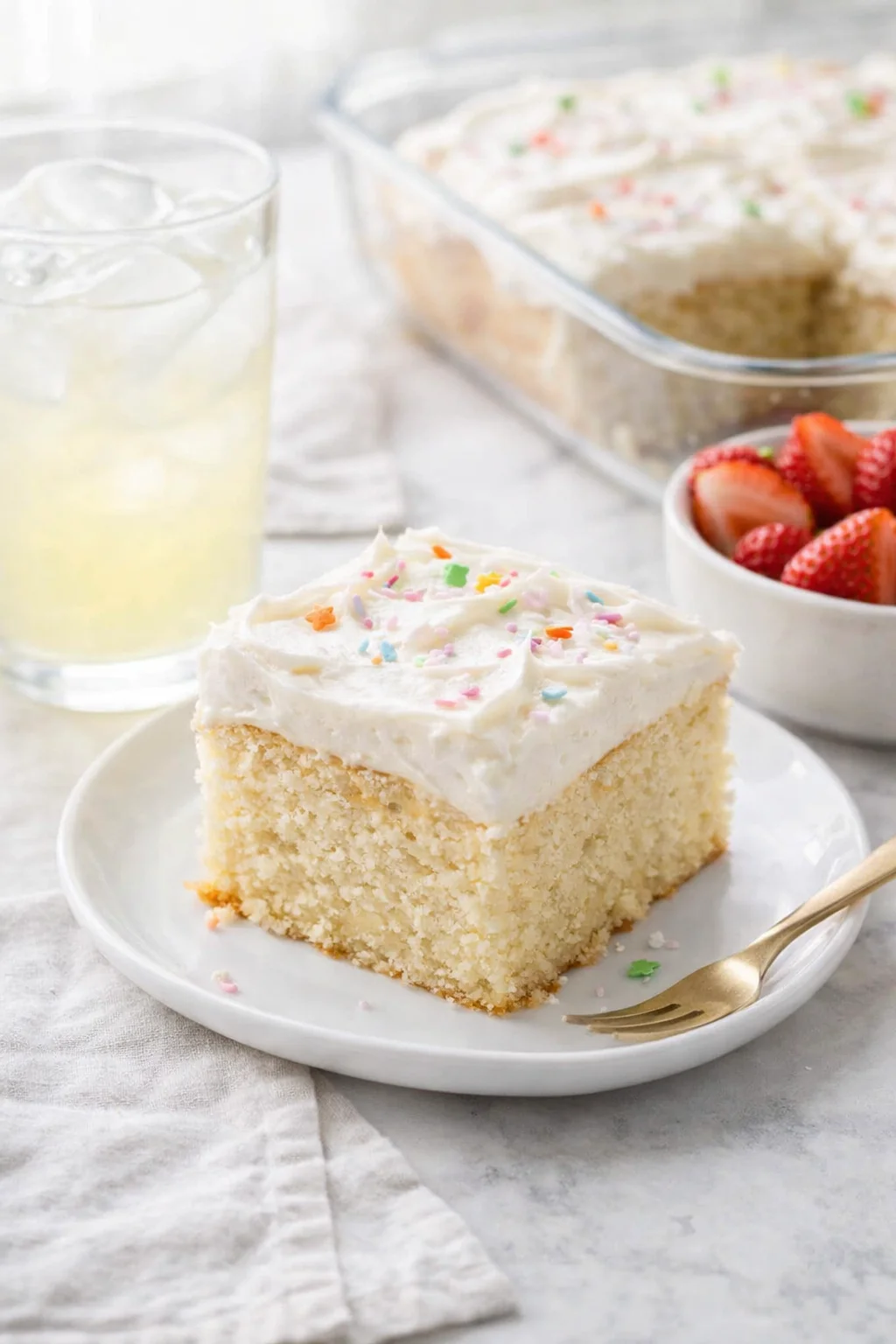
A classic vanilla sheet cake made using the reverse creaming method resulting in a soft, springy crumb with rich buttery vanilla flavor. Topped with a fluffy whipped vanilla buttercream frosting, this cake is ideal for birthdays and celebrations.
- Prep Time: 20 minutes (including bringing ingredients to room temperature and prepping)
- Cook Time: 32-35 minutes
- Total Time: Approximately 1 hour
- Yield: 9×13-inch sheet cake (serves about 12-16) 1x
- Category: Dessert
- Cuisine: American
Ingredients
- 3 cups (354g) cake flour (spooned & leveled)
- 1 and 1/2 cups (300g) granulated sugar
- 1 teaspoon baking powder
- 1/2 teaspoon baking soda
- 1/2 teaspoon salt
- 1 cup (16 Tbsp; 226g) unsalted butter, cubed and softened to room temperature
- 1 Tablespoon pure vanilla extract
- 1 cup (240ml) whole milk, at room temperature and divided
- 1/3 cup (80g) sour cream, at room temperature
- 3 large eggs, at room temperature
- Whipped Vanilla Buttercream:
- 1 cup (16 Tbsp; 226g) unsalted butter, softened to room temperature
- 4 and 1/2 cups (540g) confectioners’ sugar
- 1/3 cup (80ml) heavy cream (cold or room temperature)
- 2 teaspoons pure vanilla extract
- Salt, to taste
- Optional: sprinkles for garnish
Instructions
- Preheat oven to 350°F (177°C). Grease a 9×13-inch cake pan generously.
- Sift cake flour, granulated sugar, baking powder, baking soda, and salt together in a mixer bowl. Mix on low with paddle attachment just to combine.
- Add cubed room temperature butter, vanilla extract, and half the milk. Mix on medium speed until dry ingredients are coated and mixture is thick and sandy (about 1 minute). Scrape down the bowl.
- In a separate bowl, whisk remaining milk, sour cream, and eggs together.
- With mixer on medium, add wet mixture in three additions, mixing about 15 seconds after each addition. Scrape bowl and mix a final 15 seconds until batter is smooth but slightly lumpy. Do not overmix.
- Pour batter evenly into prepared pan and smooth top with an offset spatula.
- Bake for 32-35 minutes or until toothpick inserted in center comes out clean. Begin checking at 30 minutes if using a dark or metal pan.
- Cool cake completely in pan on wire rack before frosting.
- For buttercream frosting: Beat softened butter on medium speed until smooth and creamy, about 2 minutes.
- Add confectioners’ sugar, heavy cream, vanilla extract. Beat on low speed for 30 seconds, then increase to medium-high and beat for 4 minutes until light and fluffy.
- Adjust frosting consistency by adding more sugar to thicken or cream to thin. Add a pinch of salt if too sweet.
- Spread a thick layer of whipped buttercream on cooled cake with an offset spatula. Pipe or decorate as desired.
- Store leftover cake covered tightly in the refrigerator up to 5 days.
Notes
Make Ahead & Freezing: Cake can be baked and cooled a day in advance. Store unfrosted at room temperature (up to 24 hours) or refrigerated (up to 5 days). Frosting can be made ahead, refrigerated, then whipped again before use. Cake (frosted or unfrosted) freezes well for 2-3 months., Cupcakes: Fill liners two-thirds full. Bake at 350°F (177°C) for 19–21 minutes; recipe makes about two dozen cupcakes., Two-Layer Cake: Use two 9-inch pans lined with parchment. Divide batter evenly and bake slightly less time, start checking at 20 minutes., Cake Flour Substitution: For each cup, substitute 1 cup all-purpose flour minus 2 tablespoons plus 2 tablespoons cornstarch, sifted well together., Room Temperature Ingredients: Important for smooth batter and best texture., Sprinkle Cake Variation: Fold in about 2/3 cup (105g) sprinkles gently into batter. Avoid nonpareils as they may bleed color., Chocolate Frosting Variation: Swap whipped vanilla buttercream with chocolate buttercream and whip longer for fluffier texture.
Nutrition
- Serving Size: 1 slice
- Calories: Approximately 420 calories per serving (1 slice)
- Fat: 18g per serving
- Carbohydrates: 60g per serving
- Protein: 5g per serving
More in Cakes